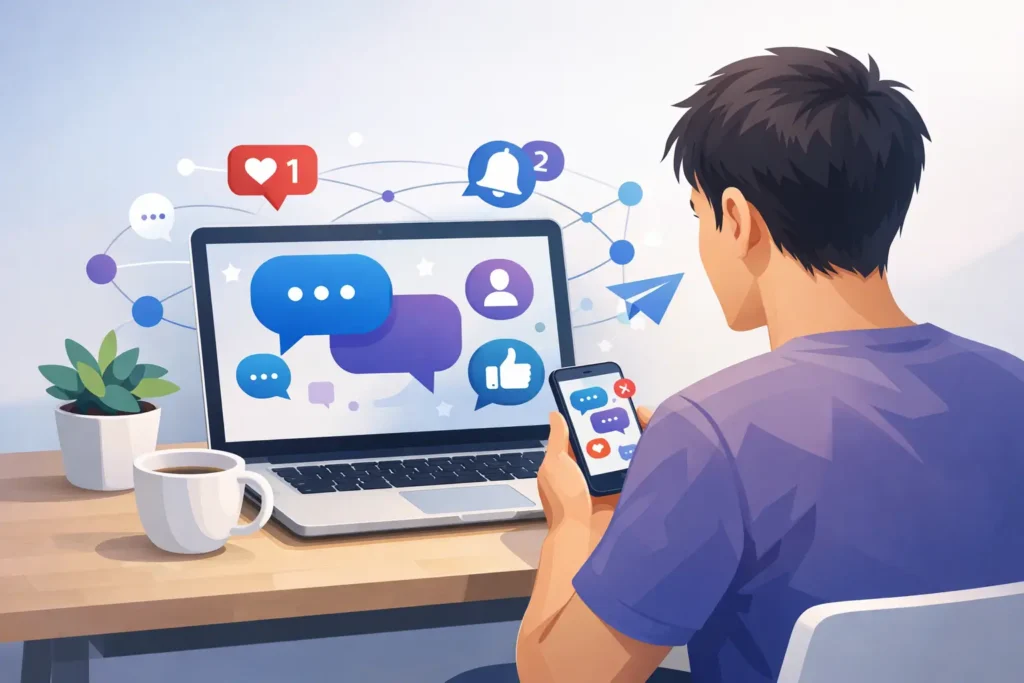
Communication has always been at the heart of human connection. From letters and phone calls to emails and instant messaging, the way we interact has constantly evolved. In today’s digital era, social media has revolutionized communication—making it faster, more visual, and more global than ever before.
Let’s explore how social media is reshaping the way we connect with one another.
1. From Face-to-Face to Digital First
Traditionally, conversations happened in person or over phone calls. Today, platforms like WhatsApp, Instagram, Facebook, and X (Twitter) allow people to connect instantly, regardless of distance.
- Communication is no longer limited by geography.
- Digital interactions often replace face-to-face conversations.
- Online presence has become as important as physical presence.
2. The Rise of Visual Communication
Words alone are no longer the main medium. Emojis, GIFs, stickers, photos, and videos dominate conversations.
- An emoji can express emotions better than a sentence.
- Short-form videos (like TikTok and Instagram Reels) allow people to tell stories quickly.
- Visuals make communication more engaging and relatable.
3. Shorter, Faster, and More Frequent Messages
Social media has made communication more instant and bite-sized.
- Instead of long conversations, people now prefer quick updates, status posts, and voice notes.
- Platforms like X encourage brevity, pushing users to share thoughts in a few words.
- Speed and convenience often take priority over depth.
4. From Private to Public Conversations
In the past, conversations were private. Today, much of our communication happens in public spaces.
- Comments, tweets, and story replies are all visible forms of interaction.
- People now share personal updates with hundreds or thousands of followers.
- Conversations are not just one-to-one but also one-to-many.
5. Influence on Language and Culture
Social media has created a new digital language.
- Slangs like LOL, BRB, FOMO, and YOLO are now part of everyday speech.
- Memes and viral trends influence how we express ourselves.
- Hashtags (#) create global discussions around specific topics.
6. Blurring the Line Between Personal and Professional
Platforms like LinkedIn, Instagram, and Facebook have transformed the way businesses and professionals communicate.
- Professionals build their brand through posts and thought leadership.
- Businesses use social media to connect directly with customers.
- Customer service often happens through DMs and comment sections.
7. Emotional Impact and Relationships
Social media has changed how relationships are built and maintained.
- Friendships and relationships now grow through constant digital interaction.
- Likes, shares, and comments often validate personal expression.
- However, it also brings challenges like miscommunication, over-dependence on online validation, and reduced face-to-face bonding.
8. The Global Conversation
Perhaps the most powerful change is the ability to connect globally in real-time.
- A single post can reach millions within minutes.
- Social media amplifies voices, giving individuals a platform to be heard.
- Global movements, trends, and discussions are now shaped online.
Conclusion
Social media has undeniably reshaped human communication—making it faster, more visual, and more far-reaching. While it brings new opportunities for connection, it also challenges us to balance digital interactions with genuine, personal conversations.
In the future, as technology like AI, AR, and the Metaverse continues to grow, communication will likely become even more immersive and interactive.
One thing is certain: the way we connect will keep evolving, and social media will remain at the center of it.